Working in the U.S., I often hear people talk about 53-foot trailers.
When I first arrived, I honestly had no idea how big that really was.
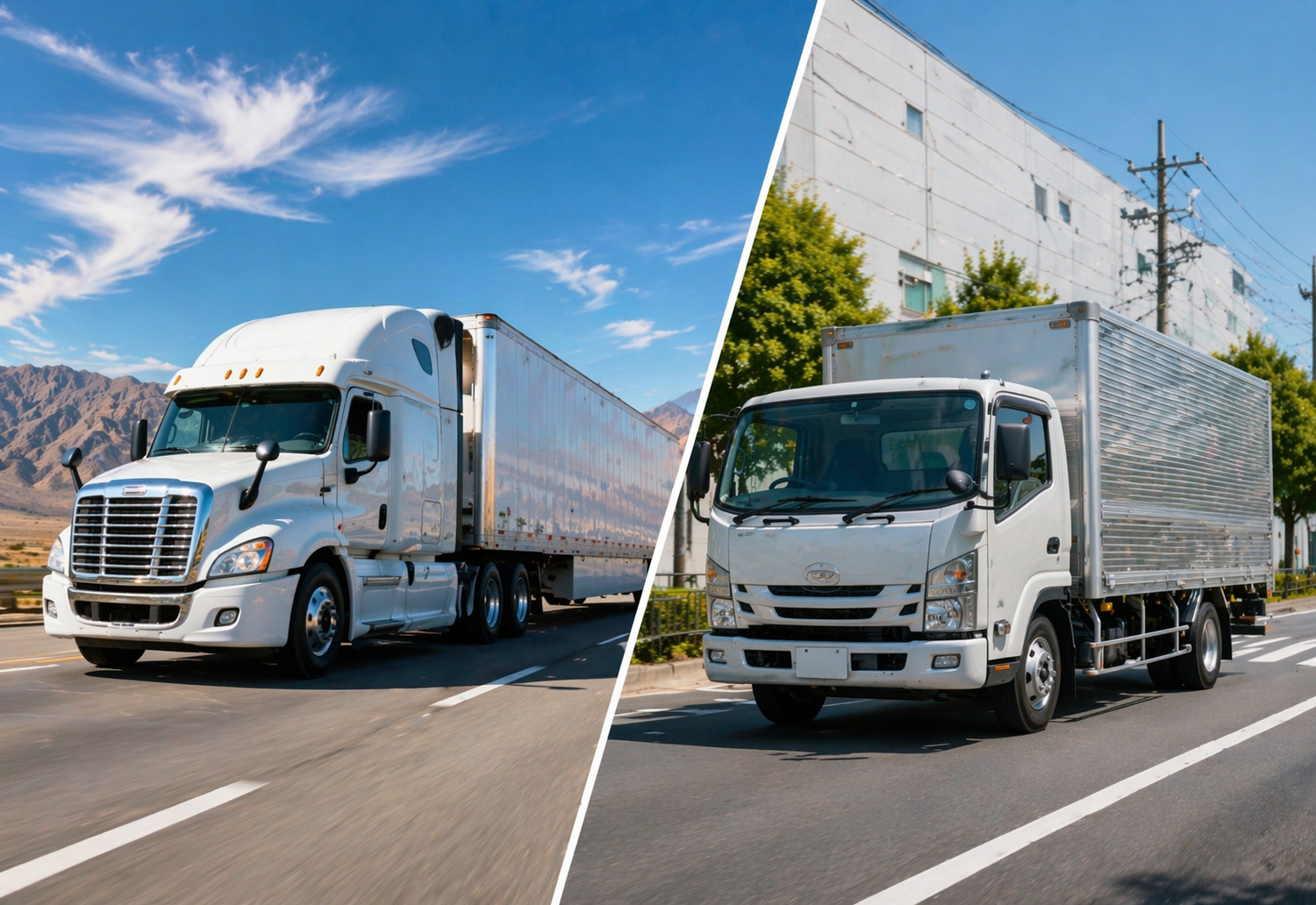
A 53-foot trailer is about 16 meters long. By comparison, a typical trailer in Japan and a 40-foot shipping container are both around 12 meters long. Looking at the numbers, the difference is quite noticeable.
What surprised me even more was that 53-foot trailers are not considered unusually large in the United States. They are everywhere on the highways and are treated as a standard part of everyday logistics.
Coming from Japan, I remember feeling a little nervous driving next to one for the first time. Now, I hardly think twice about it.
The reason this size became standard is largely practical. Freight in the U.S. often travels long distances across a vast country, so maximizing trailer space helps move more cargo efficiently.
What I find especially interesting, however, is how trucks are described.
In the U.S., people often refer to trailers by their length—53 feet, for example. In Japan, trucks are more commonly identified by payload capacity, such as a 10-ton or 16-ton truck.
Of course, weight limits are important in both countries. But in everyday conversations, Americans tend to think in feet, while Japanese tend to think in tons.
It is a small difference, but it reflects two different logistics environments—and two different ways of looking at the same truck.
AM