The way warehouses are designed can vary quite a bit from country to country.
In Japan and the U.S., differences in land availability and logistics have created very different warehouse environments.
One of the biggest differences is how space is used.
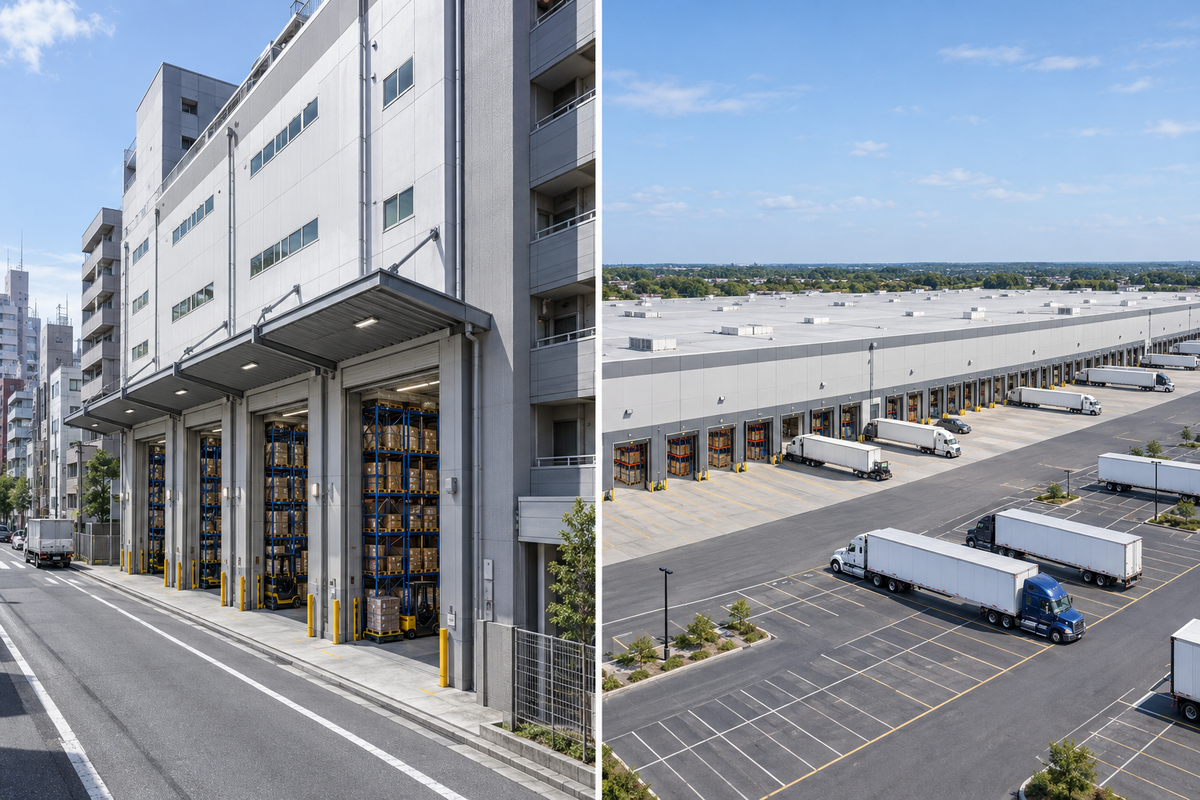
In Japan, where land is limited, multi-story warehouses are common.
Freight elevators and vertical conveyors help make the most of limited space.
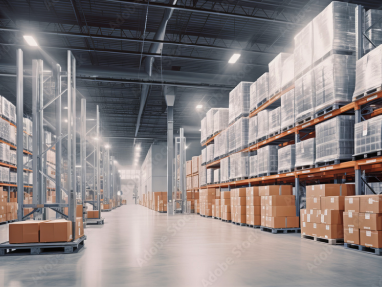
In the U.S., warehouses are more often single-story buildings with high ceilings and large footprints.
Instead of building up, they make use of space across a larger area and store goods vertically inside the building.
There are differences in loading operations, too. In the U.S., dock doors designed for large trailers are common, allowing trucks to back directly up to the warehouse for loading and unloading.
Storage racks can also look different.
Nestainer racks are often used in Japan because they are easy to move and rearrange, while fixed pallet racks are more common in the U.S.
Looking at these differences, I find it interesting that warehouses reflect the logistics environment of each country.
Japan tends to make the most of limited space and flexibility, while the U.S. often emphasizes scale and efficiency.
At Suzuyo America, we provide warehousing services through our network of warehouse partners across the U.S.
We help customers find the right warehouse and operating setup for their logistics needs.
Learn more about our warehousing services here.