Living in the U.S., I’ve noticed how often hot sauce appears in everyday meals.
It doesn’t feel like a “special” condiment, but more like something that is simply always there.
In cafeterias and restaurants, it’s common to see several types of hot sauce lined up on tables or counters.
There are often different levels of heat and flavor, and people are free to choose whatever they like.
What also stood out to me is how widely it’s used.
It’s not just for meat dishes or sandwiches, but also for seafood like oysters.
It might be somewhat similar to soy sauce or wasabi in Japan, but it feels more flexible here—there are no clear rules about what it should or shouldn’t go with.
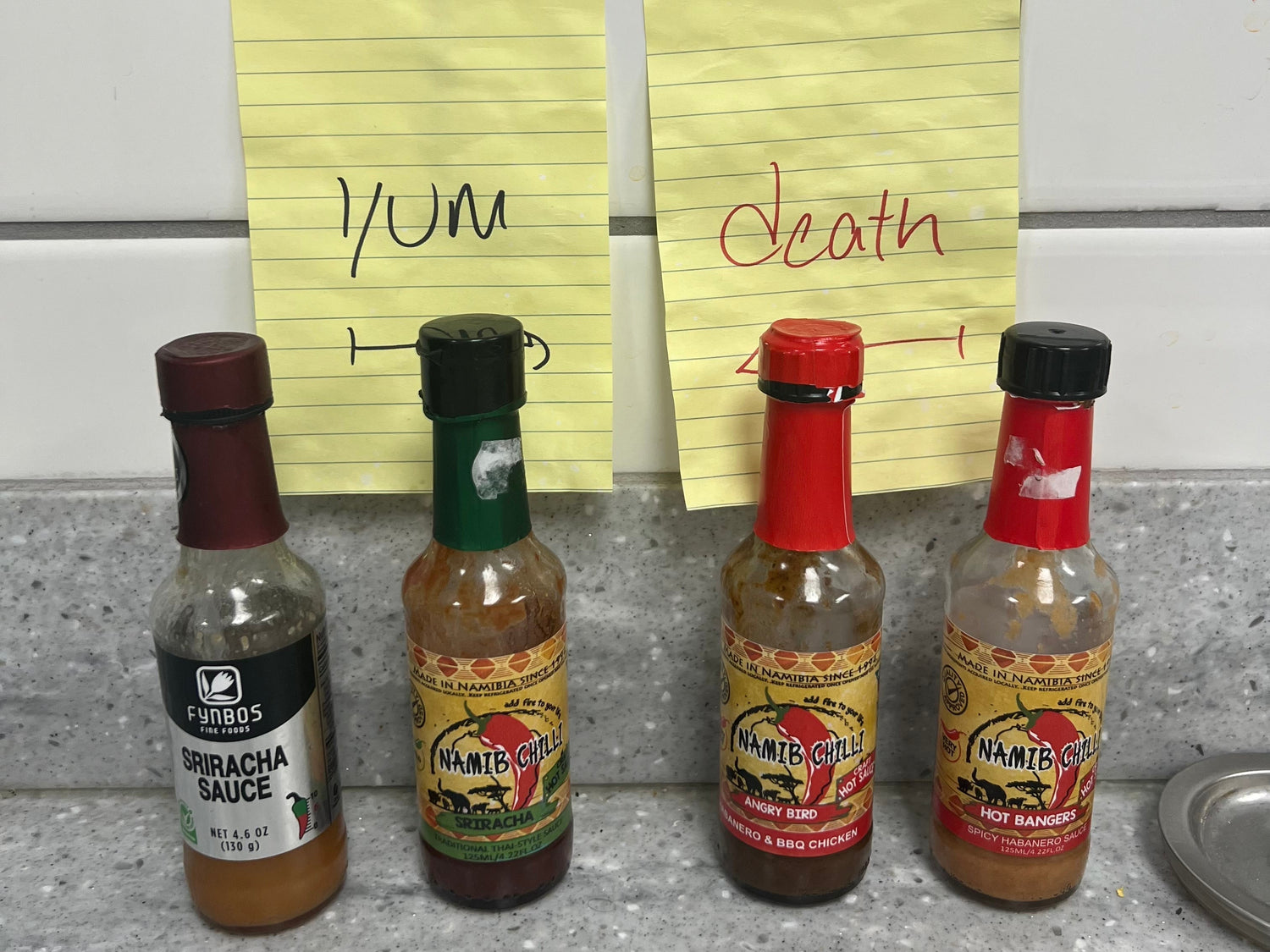
One thing I remember clearly is the hot sauce setup in a company cafeteria.
There were four different bottles, each with a label showing its level of spiciness, but the way it was described was quite unique:
“YUM → DEATH”
I couldn’t help but laugh.
It’s simple, direct, and a bit funny in how it expresses the heat levels.
When I looked into the background of hot sauce a little, I learned that its roots are said to come from chili pepper traditions in Central America and culinary culture in the Caribbean.
Over time, chili peppers mixed with vinegar and salt for preservation, and this developed into many different variations.
One of the most well-known examples is Tabasco, but in reality there are countless types of hot sauces, and Tabasco is just one brand among many.
Before I knew it, I had already gotten used to seeing people put hot sauce on almost everything.
AM