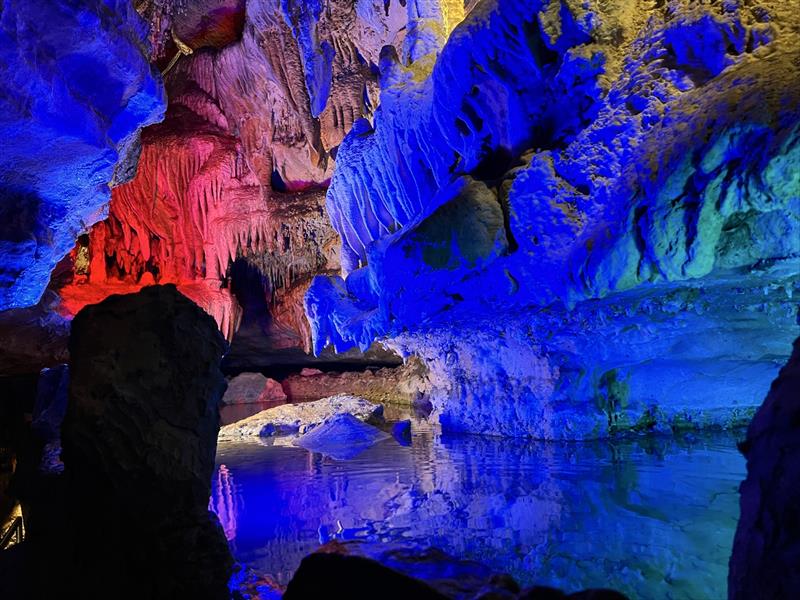
Recently, I went on a cave tour in Tennessee.
It was my first time exploring a cave in the U.S., so I was really excited to see what it would look like inside.
I made an interesting discovery along the way.
The way the guide described the shapes of the stalactites and stalagmites was completely different from what I was used to in Japan.
In Japanese caves, formations are often compared to familiar things from nature or animals, like “a monkey’s seat,” “a turtle shell,” or sometimes even “a Jizo statue.”
In contrast, here in the U.S., they sometimes compare shapes to food, like “bacon!” or “steak!”, and even to fantastical things, like “a dragon’s foot!”

At first, I couldn’t help but laugh and think, “Bacon?”
But the more I thought about it, the more I realized it was fascinating beyond just being funny.
Even though the formations are the similar, what people associate them with is completely different between Japan and the U.S.

The things we consider familiar really depend on our culture—and noticing this little difference was what I found so interesting.
AM